LITERARY FICTION / Hanya Yanagihara
I couldn't leave Jude alone in the dark.
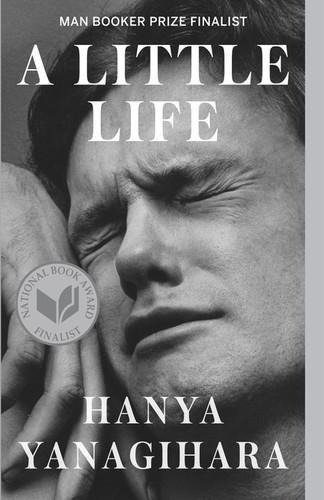
Four college friends move to New York and build their lives over several decades, with the enigmatic Jude at their center. Yanagihara's novel is vast, intimate and often painful, a study of friendship and of a past that will not stay buried.
Lights out
The night it started
A word first, because the book deserves one: A Little Life deals at length with abuse, self-harm and suicidal despair. It does not look away, and I would not hand it to anyone without saying so.
I had been circling it for weeks, put off by the size of it. Over seven hundred pages, heavy enough that reading in bed means propping it against your knees. I started on a Friday night with the idea of getting through the first section and seeing how I felt. The lamp was on, the tea was still warm, the street outside was the usual weekend noise. When I next looked up, the noise had stopped, the tea was a cold brown ring at the bottom of the mug, and the clock said something I chose not to believe.
What the book does
It begins as a novel about four friends from college who have moved to New York: Willem, a kind and handsome would-be actor; JB, a painter, funny and ambitious and sometimes cruel; Malcolm, an architect from a comfortable family who is still working out who he is; and Jude, a brilliant law student, reserved, with an injured body and a past he will not discuss. The early chapters are full of crummy apartments, bad jobs, parties, arguments and the specific closeness of people in their twenties who have decided to be each other's family.
Then, slowly, the book narrows. Jude moves to the center, and the novel becomes about what happened to him before any of the others knew him, and what that past does to the life he tries to build. Hanya Yanagihara gives very little away early. She lets you love him first.
One structural choice stayed with me. The book barely marks historical time. There are no headlines, few dates, little sense of which year it is outside the friends' own lives. The effect at night was strange and total: the world shrank to these few people and their rooms, and it was hard to remember there was anything else.
By the third section I was not reading for plot anymore. I was reading so he would not be alone.
Why the lamp stayed on
The pull here is not suspense in the usual sense. It is attachment. Willem's steadiness, Harold's patience as the law professor who takes Jude seriously, Andy the doctor and his gruff, exhausted loyalty. These relationships are written with such tenderness that leaving them mid-chapter felt like walking out on a friend who had just started to talk. I kept going because I wanted the people who loved Jude to reach him, and because I could not tell whether they would.
There were moments I had to put the book face-down on the duvet and breathe. Yanagihara is relentless, and she knows it. But the cruelty is never the whole picture. Between the worst passages are long, warm, ordinary scenes, dinners, holidays, small jokes, a friend arriving at the right moment, and those scenes are what make the dark ones land so heavily.
A little friction
I understand why many readers find it too much. The suffering is piled high, sometimes higher than the story seems to need, and there were stretches where I felt manipulated even as I was moved. JB and Malcolm also fade as the book goes on, which I missed. It is a novel of enormous feeling and not of restraint, and that will divide people.
Who should read it, and when
Read it only when you have room for it, emotionally and in your calendar. Not during a hard month. Not on a work night. Read it if you care about friendship as seriously as most novels care about romance, and if you are prepared to be with someone in pain for a very long time.
Last thought before lights-out
At 4:06 I switched off the lamp. The room was completely dark and completely quiet, and I lay there thinking about how rarely a novel lets friendship be the whole story. That thought kept me awake a while longer than the book did.