LITERARY FICTION / Elena Ferrante
I stayed in that Naples courtyard past two.
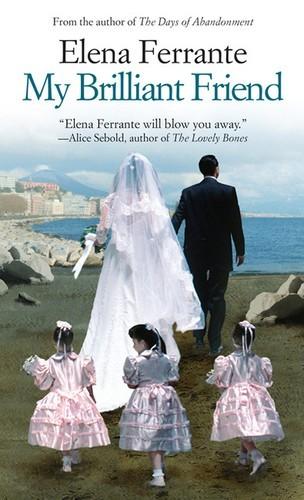
Two girls grow up in a poor, violent neighborhood of 1950s Naples, bound by a friendship that is also a rivalry. Ferrante writes with such ferocious intimacy that the street itself seems to breathe.
Lights out
The night it started
I started My Brilliant Friend expecting a quiet literary novel, the kind you read twenty pages of and set aside with a sense of virtue. Instead I found myself in a crowded, shouting neighborhood on the outskirts of Naples, and I did not get out until after two. The house was silent. The lamp made a small yellow circle on the duvet. In the book, someone was always yelling from a window.
The hook
The novel opens in old age. Elena Greco, known as Lenù, gets a phone call: her lifelong friend Lila has vanished, and seems to have done it on purpose, taking everything of herself with her. Elena, irritated and shaken, sits down to write their story from the beginning. And the beginning is a poor, violent neighborhood in the 1950s, where two small girls become friends and do not stop measuring themselves against each other for the rest of their lives.
There is a list of characters at the front, grouped by family, and I laughed at it before I started. By midnight I was flipping back to it, checking who belonged to the Carraccis and who to the Solaras, who was a Cerullo and who a Sarratore. The list isn't decoration. The neighborhood is a whole society.
What kept the lamp on
The first pull is Lila herself. She is the shoemaker's daughter, thin and fierce and frighteningly quick. She teaches herself things Elena has to labor over. She is the one who goes first, into danger and into trouble, and Elena, who narrates, follows. Ferrante never lets us inside Lila's head. We see her only through Elena's mix of love, envy, admiration and resentment, and that limitation is the engine of the whole book. I kept reading because I wanted to understand Lila, and the novel keeps reminding you that Elena doesn't either.
The second pull is the way childhood is written. An early scene, in which the girls drop each other's dolls into a dark cellar and then climb the stairs to the apartment of the most feared man in the neighborhood to demand them back, is as tense as any thriller I've read. Ferrante writes childhood fear without nostalgia. Violence is ordinary here. A father throws his daughter out of a window; husbands beat wives in full hearing of the courtyard; loan sharks and black marketeers set the rhythm of life. The girls see all of it and absorb it into their games.
It is a book where nobody is safe and nobody can leave, and somehow it reads like a love story anyway.
The third pull is education. Elena keeps going to school, nudged forward by a teacher who believes in her, while Lila is kept at home. The gap that opens between them is about money and class and family, and Ferrante charts it with remarkable precision: the Latin and Greek, the books borrowed from the lending library, the summer by the sea on Ischia, the boys who notice one girl and then the other. Every small advantage becomes a debt between the two friends.
A little friction
The prose, in Ann Goldstein's English translation, is plain and fast and sometimes almost flat, a long, unbroken rush of telling. For the first few chapters I wanted a little more air, a little more scene. And because Elena narrates everything with such bitter honesty about her own small motives, there were moments when I wanted to step out of her head for a while. But by the halfway point, the plainness had become intimacy. It reads like someone telling you the truth very late at night.
Who should read it, and when
Anyone who has had a friend they both loved and competed with. Anyone who likes long, family-saturated novels with a strong sense of place. This is the first of four books, so start it knowing that the story continues, and that you will probably want the second one on the nightstand before you finish.
Last thought before lights-out
At 2:05 I closed the book and sat for a moment in the quiet. I had been in that courtyard so long, with its shouting and its tenements and its two girls watching each other, that the silence of the room felt almost rude. I could still hear them.