MEMOIR / Tara Westover
I had to know she got out.
Raised by survivalist parents in the mountains of Idaho, Tara Westover never set foot in a classroom until she was seventeen. Her memoir follows the long, costly road from that isolated family to a doctorate at Cambridge.
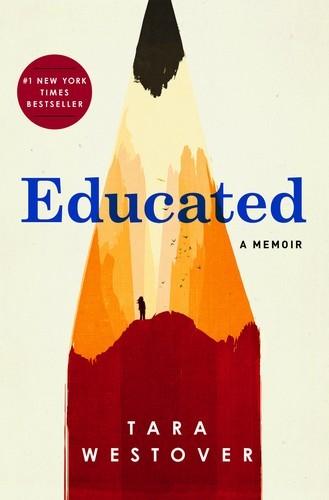
Lights out
The night it started
I picked up Educated after dinner because I wanted something true and steady, a memoir I could read a chapter of and put down. The tea was still hot when I started. It was stone cold by the time I noticed the house had gone silent and the only light left was the lamp on the nightstand, making its small yellow circle on the duvet.
Tara Westover opens on the mountain, Buck's Peak in Idaho, and she writes it the way you remember a place you can no longer go back to without paying for it. The wind, the fields, the scrapyard, the shape of the peak against the sky. Within a few pages I understood I was not going to read only one chapter.
What the book does
The facts are startling on their own. Westover was the youngest of seven children, raised by a father who distrusted doctors, public schools and the federal government, and a mother who worked as a midwife and made herbal remedies. There were no birth certificates for some of the children. There was no school. There was a basement stocked for the end of the world, and a father who believed the turn of the millennium might be it.
What makes the book more than a list of strange facts is the way Westover narrates from inside the child's logic first. She does not begin by judging the family. She begins by living with it, so the reader lives with it too. Working in her father's scrapyard, the accidents, the injuries treated at home, all of it arrives as normal life before it starts to look like anything else. At night that is a disorienting thing to sit with. You keep waiting for someone in the book to say stop.
I kept reading because every chapter felt like a door she might not be allowed to walk through.
Why the lamp stayed on
Part of the pull is simple suspense. The lead tells you where she ends up, and still I could not believe she would get there. When she teaches herself enough to sit the ACT and win a place at Brigham Young University, the classroom scenes are almost painful to read: a young woman who has never heard of things everyone around her takes for granted, learning in public, without a map. I put the book down on my chest for a minute after one of those scenes and stared at the ceiling.
The other pull is harder. There is a brother whose violence runs through the middle of the book, and the family's way of not seeing it is in some ways worse than the violence. Westover is careful here. She uses footnotes to say where a sibling remembers an event differently, where her own memory is uncertain, where she has two versions of the same afternoon. I found those footnotes unexpectedly moving. They are the opposite of a writer settling scores. They are someone trying to be fair to a past that was not fair to her.
A little friction
Some readers will want more of the outside world, more about the years at Cambridge and Harvard and less of the circling back home. I felt that tug too in the final third, where the returns to Idaho start to rhyme with each other. But the repetition is honest. Leaving is not one event in this book; it is a pattern, and the pattern costs something every time.
Who should read it, and when
Read it when you can give it a long evening, ideally one with a free morning after. Anyone who has ever been the first in a family to do something, or who has loved people they had to step away from, will find a hard mirror here. It is not a comfortable book, but it is never cruel to its reader.
Last thought before lights-out
At 2:22 I closed it, switched off the lamp and lay there thinking about what it means to be taught the world by people who are afraid of it. The quiet in the room felt different afterward, more like a choice than an absence. I fell asleep thinking about that mountain and the small figure walking down it.