LITERARY SUSPENSE / Carlos Ruiz Zafón
I followed a forgotten book into Barcelona's dark.
In postwar Barcelona, a bookseller's son is taken to the Cemetery of Forgotten Books and chooses a novel by an obscure author. His search for the writer draws him into a city of secrets, ruined mansions and old loves.
Lights out
The night it started
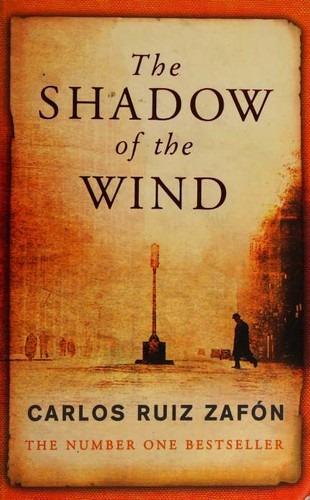
There is something slightly dangerous about reading a novel about a book that keeps a boy awake all night. I knew the premise of The Shadow of the Wind going in, and I still opened it at half past ten, in bed, rain on the window, assuming I was too old to be caught by it.
Somewhere around midnight the rain stopped and I noticed the silence more than I had noticed the rain. The lamp made its small circle on the duvet. I was in Barcelona in 1945, walking through fog at dawn, and I did not want to come back.
What the book does
Daniel Sempere is ten when his father, a widowed bookseller, wakes him before sunrise and takes him through the old streets to a hidden library called the Cemetery of Forgotten Books. Each visitor is allowed to adopt one book and promise to keep it alive. Daniel chooses a novel called The Shadow of the Wind by an author named Julián Carax, reads it in a single night, and goes looking for the rest of Carax's work.
There isn't any. Someone has been hunting down every copy of Carax's novels and burning them, a man who seems to have stepped out of Carax's own pages. As Daniel grows up, the search for the vanished author becomes the story of his own adolescence: first loves, a crumbling mansion, a vengeful police inspector, and a city that would rather not remember the years just behind it.
Why the lamp stayed on
The pull is the oldest one there is: a mystery that keeps opening onto another mystery. Carlos Ruiz Zafón structures the book as a series of encounters, each person Daniel meets knowing one piece of Carax's life and holding it back until the right moment. A conversation ends, a door shuts, and you have one more fragment. It is impossible to stop between fragments. I tried twice.
Then there is the city. Zafón's Barcelona is all damp stone, gaslight, bookshops, cafés and great houses gone to ruin along the avenues climbing toward Tibidabo. The Aldaya mansion, empty and overgrown, is one of the great gothic settings, and the scenes there are the ones I read with the blanket pulled a little higher. Postwar Spain sits just under the surface too: people who disappeared, people who informed, people who learned to keep their heads down. The book wears its history lightly, but it is there in every frightened silence.
It is a love letter to books that kept daring me to stay up as late as its narrator did.
And there is Fermín Romero de Torres, the vagrant Daniel's father takes into the shop, who turns out to be the most generous, profane and quick-tongued presence in the novel. Every time he walked into a scene the book grew warmer, and at 2 AM warmth counts for a lot.
I won't say who the man burning the books is, or what happened to Carax. The pleasure of the book is in piecing that together, and Zafón plays fair with the clues.
A little friction
It is a big, lavish, theatrical novel, and the theatricality sometimes tips over. Some of the women in Daniel's life exist more as objects of longing than as people, and the villain is close to operatic. The long letter-like confession that carries much of the later book is a lot of telling at once. I noticed all of that. I kept reading anyway, which says something about the engine underneath.
Who should read it, and when
Read it in the wet months, with a lamp and something hot nearby. Read it if you ever had a book that felt like a secret only you knew about. Read it on a Friday, because Lucia Graves's English translation flows so easily that the pages go quicker than you think, and the last third is not something you will want to break off in the middle of.
Last thought before lights-out
It was 3:52 when I turned off the lamp. I lay in the dark thinking about all the books I have owned and lost, and about the idea of a place where they might be waiting. The room felt bigger, the way a library does when the lights are low.