MYSTERY / Wilkie Collins
A Victorian sensation novel outlasted my bedtime.
A drawing master meets a mysterious woman dressed in white on a London road at night, shortly before taking a post at a country estate. Collins tells the story through a chorus of witnesses, each piece of testimony tightening the plot.
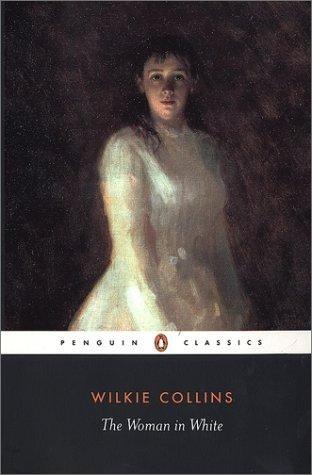
Lights out
The night it started
I had meant to read The Woman in White slowly, over a couple of weeks, the way you are supposed to read a long Victorian novel. A few pages a night, a bookmark, sensible sleep. Instead I opened it at about half past nine with the window cracked and the street still busy, and by the time I looked up the traffic had stopped and the tea on the nightstand had gone the color of the lamplight and twice as cold.
It is the road that does it. Early on, the young drawing master Walter Hartright is walking back toward London late at night when a woman dressed all in white touches his shoulder out of nowhere. Wilkie Collins stages the moment with almost nothing: an empty road, moonlight, a stranger who is frightened and will not say why. I read the scene with the room dark around me and felt the back of my neck go cool.
What the book does
Hartright takes a post teaching drawing at Limmeridge House in Cumberland, to two young women: the gentle Laura Fairlie and her half-sister Marian Halcombe. Laura is engaged to Sir Percival Glyde. That is most of what I will say about the plot, because the pleasure of this novel is watching it close around its characters a little at a time.
The structure is the real trick. Collins tells the story through a sequence of written accounts, as if the evidence were being gathered for a hearing. Hartright speaks first, but then the narrative passes to a family solicitor, to a diary, to a fussy invalid uncle, to a housekeeper, each with a different voice and a different blind spot. Every change of hand made me sit up, because each new witness knows something the last one did not, and each one leaves something out.
The uncle, Frederick Fairlie, is one of the funniest people in Victorian fiction, a man who treats every human request as an assault on his nerves. I laughed out loud at him around midnight and then felt guilty about the noise.
Why the lamp stayed on
Mostly it was Marian. She is clever, blunt, brave and wonderfully alive on the page, and when the story is in her hands it moves at a speed I did not expect from a book first serialized in 1859. You can feel the original weekly instalments in the rhythm: chapters that end on a door opening, a letter arriving, a figure seen at a distance. Collins knew exactly how to make a reader come back next week. At night he simply makes you turn the page.
Every narrator handed me a new piece of the puzzle and quietly kept one back.
And then there is Count Fosco, who arrives partway through and changes the temperature of the whole novel. He is large, soft-spoken, elaborately polite, devoted to his pet white mice and his canaries, and more unsettling than any villain who raises his voice. I will not say what he does. I will say that I read his scenes with my knees pulled up under the duvet.
A little friction
It is long, and it is a Victorian long. There are stretches in the middle where the legal and financial machinery grinds, and Laura, for all the plot that turns on her, can feel more like a cause than a character. Some of the attitudes to women and to mental illness are firmly of their age. But Marian pushes against those limits from inside the book, and that tension is part of its charge.
Who should read it, and when
Read it in autumn, ideally in a run of long evenings, and give in early to the idea that you will stay up later than planned. If you love modern suspense built on unreliable documents and shifting points of view, this is one of the places it began.
Last thought before lights-out
I made myself stop at 12:47, mid-section, which felt like walking out of a room while someone was still talking. The lamp went off and the window was just a grey square. For a second I half expected to see someone pale standing at the end of the road.