GOTHIC FICTION / Daphne du Maurier
I kept walking the halls of Manderley past three.
A young bride arrives at a vast Cornish estate and finds it still ruled by the memory of the first Mrs de Winter. Du Maurier turns a love story into a slow tightening of dread, one closed door at a time.
Lights out
The night it started
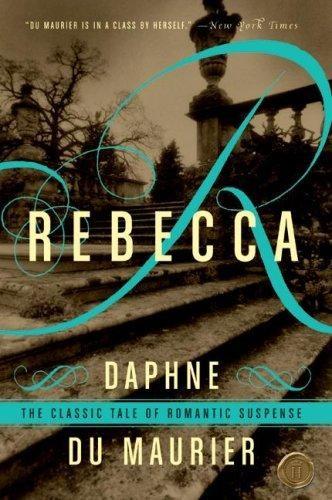
I opened Rebecca at about half past ten because I wanted something old and slow to fall asleep to. That was the plan. The tea went cold on the nightstand somewhere around the drive up to the house, and by the time I next looked at the clock the radiator had stopped ticking and the street outside had gone completely silent.
The novel begins with a dream of going back to a place that is no longer what it was, and from that first page you know you are reading from the far side of something. Daphne du Maurier never lets you forget it. Every bright scene afterward carries a faint shadow, and at night, with one lamp on and the rest of the room dark, that shadow felt very close.
What the book does
The setup is simple. A shy young woman, working as a paid companion to a bullying American in Monte Carlo, meets Maxim de Winter, an older widower who owns a famous estate in Cornwall. They marry quickly. He brings her home to Manderley, where the servants, the rooms, the routines and even the stationery still belong to his first wife, Rebecca, who died the year before.
What I had forgotten, or never quite noticed, is that the narrator never tells us her own name. She is the second Mrs de Winter and nothing else. Reading in bed, that absence got under my skin. She walks into the morning room and finds the desk, the pigeonholes, the handwriting on the labels, all of it someone else's. She is introduced to the house and the house seems to look past her.
Then there is Mrs Danvers, the housekeeper, who is one of the great unsettling figures in English fiction precisely because she rarely does anything you could point to. She appears in doorways. She is simply there, in black, too still. Du Maurier gives her almost no physical action and lets the narrator's nerves do the rest.
Why the lamp stayed on
The pull of Rebecca is not plot, at least not for the first long stretch. It is the slow, specific discomfort of a person who believes she is failing at a life she was never trained for. The narrator rehearses conversations that never happen. She imagines whole scenes of people judging her, and du Maurier lets those imagined scenes run on for a paragraph before snapping back to the real room. I recognized the habit. At 1:30 AM, I recognized it a little too well.
The house itself does a lot of the work. The rhododendrons crowding the drive, too red and too heavy. The sea you can hear but not always see. The closed west wing. A cottage down in the cove that the dog keeps running toward. Each detail is ordinary on its own, but they accumulate, and the effect is of a building that keeps getting bigger the longer you stay in it.
I kept thinking one more chapter would let me relax into the house, and it never once did.
Somewhere past two, the book shifts gear. I won't say how or where. I'll just say that the pace I had settled into, that slow, anxious drift through rooms and lunches and visits from Maxim's sister, gives way, and I sat up properly in bed for the first time all night. Anyone who knows the book knows the stretch I mean. Anyone who doesn't should get there without a map.
A little friction
Not everything has aged gracefully. The narrator's devotion to Maxim can be hard to watch, and the novel's ideas about marriage and class belong very much to 1938. There are moments when her timidity tips from painful into frustrating, and I wanted to reach into the page and hand her a sentence to say. But I think du Maurier knows that. The discomfort is part of the design, and the book is sharper about power inside a marriage than its romantic reputation suggests.
Who should read it, and when
Read it in autumn or winter, ideally with weather outside. Read it when you have a free morning ahead, because the second half will not let you go at a sensible hour. If you have only seen one of the film versions, the novel is stranger, more interior and more uneasy than you might expect.
Last thought before lights-out
I turned the lamp off at 3:12 and lay there listening to the house, which is a perfectly ordinary house with no west wing at all. It took a while to believe that. Manderley does that to a room.