GOTHIC FICTION / Jean Rhys
A slim book made the whole room feel feverish.
Rhys imagines the early life of Antoinette Cosway, a Creole heiress in post-emancipation Jamaica, before she becomes the madwoman in the attic of Jane Eyre. It is a lush, feverish novel of displacement and dread.
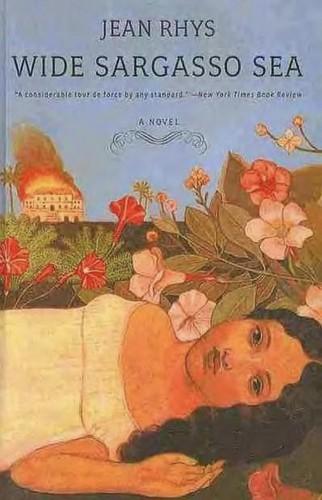
Lights out
The night it started
It was a cold night, the radiator ticking, and I picked up Wide Sargasso Sea because it was thin. Under two hundred pages, I thought. An hour, maybe two, then sleep.
I was wrong about the time and wrong about the cold. Within a few pages the room seemed to have filled up with heat: wet leaves, scent, rot, something in the undergrowth watching. I pushed the duvet off my legs before I noticed I was doing it.
What the book does
Jean Rhys takes a figure from Jane Eyre, the first Mrs Rochester, locked away at Thornfield and given almost no voice of her own, and gives her a childhood, a home, a name and a story. Here she is Antoinette Cosway, a white Creole girl growing up in Jamaica in the years just after emancipation. Her family's estate, Coulibri, is falling apart. Her father is dead, the money is gone, her mother is beautiful and frightened, her little brother is sickly, and the neighbours, Black and white, have no love for them. The garden has gone wild, and Rhys describes it as if it were alive and not entirely friendly.
The novel is in three parts. The first belongs to Antoinette as a girl. In the second, after she is married to an Englishman who is never named, the narration passes mostly to him, on their honeymoon at a remote house in the hills of another island. The third part is very short, and you already know, from Brontë, roughly where it must be set.
Why the lamp stayed on
The first thing is the atmosphere. Rhys writes in short, sharp, sensual sentences, and every one of them seems to have a smell in it. Even before anything terrible happens, there is a feeling of menace: dogs, heat, a horse that dies, whispers in the yard, an outsider's sense that a whole island is turning away. I kept reading because I was uneasy and wanted to see where the unease was coming from.
The second thing is Christophine, the woman from Martinique who looks after Antoinette and is the most clear-sighted person in the book. She is frightening to some characters and a refuge to others, and every time she came back into a scene I sat up a little.
But what really kept the lamp on was the switch to the husband's voice. Suddenly I was looking at Antoinette from outside, through the eyes of a stranger who doesn't understand the place, the heat, the people or her, and who is being fed stories about her family. The dread doubles. I knew the ending Brontë gave this marriage, and I still read the second part with my jaw tight, hoping it might go some other way.
It's a novel about a woman written out of someone else's story, and it reads like the heat before a storm.
A little friction
It is a book that leaves gaps on purpose. Scenes are told in fragments, time jumps without warning, and dialogue often comes with no clear signal of who is speaking. I reread a few passages because I had lost track of where I was or who was there. It also helps to know Jane Eyre, at least in outline; without it some of the weight of the final pages might not land. And if you go in hoping for a comfortable revisionist heroine, you won't get one. Rhys isn't consoling anybody.
Who should read it, and when
Read it in one sitting, late, when the house is quiet. It is short enough to do that, and it works best as a single, uninterrupted fever. It is for readers who like gothic novels where the haunted house is really a haunted history, and for anyone who finished Jane Eyre and wondered about the woman upstairs.
Last thought before lights-out
I turned the lamp off at 12:42, earlier than my usual late nights, because the book had ended and there was nothing left to read. That was the strange part. It felt as if it had taken far longer than an evening. I lay in the dark with the radiator ticking and the room cool again, still feeling the heat, thinking about all the minor characters in all the novels I have loved, and what they might say if anyone let them speak.