NARRATIVE NONFICTION / Patrick Radden Keefe
History that read like a thriller I couldn't shut.
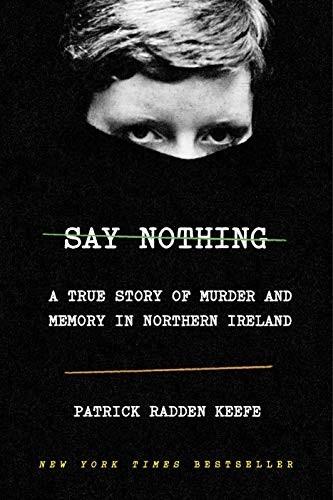
Beginning with the 1972 abduction of Jean McConville, a widowed mother of ten, Keefe traces the lives of those caught up in the Troubles. It is a true story of loyalty, silence and the long shadow of violence in Northern Ireland.
Lights out
The night it started
I meant to read the first part of Say Nothing and save the rest for daylight. Nonfiction usually lets me do that. It has chapters that feel like natural places to rest, and the facts wait patiently for you overnight. I made a pot of tea instead of a mug, which should have been a warning, and settled under the lamp at about ten.
By midnight the pot was empty and I had not moved. It turns out Patrick Radden Keefe writes history the way a good crime novelist writes a manhunt, and every time I reached a section break I found a reason to read one page past it.
What the book does
The book opens in December 1972, in the Divis Flats in West Belfast, where a group of people come to the door and take Jean McConville, a widowed mother of ten, away from her children. She does not come back. From that single night, Keefe widens the frame to take in the whole long war in Northern Ireland, and the people who fought it.
The central figures are not who I expected. Much of the book follows Dolours Price, a young republican who, with her sister Marian, went from civil rights marches to the IRA, and Brendan Hughes, a commander in Belfast whose loyalty to the cause and to Gerry Adams curdles over decades. Their stories run alongside the McConville children, who were split up and grew up carrying the absence of their mother, and alongside the later history of an oral history project at Boston College that recorded former paramilitaries on the promise that their words would stay sealed.
Why the lamp stayed on
The structure is the first thing. Keefe builds the book in short chapters that each end on a turn, a disclosure or a small, quiet shock, and he holds back information with real discipline. He knows exactly what the reader knows at each moment. There were several times I turned a page, read one line, and set the book against my knees just to sit with it.
The second thing is the people. Dolours Price in particular is drawn with a novelist's attention: her intelligence, her conviction, her charisma, and what years of violence and imprisonment did to all three. Keefe never asks you to admire her, and never lets you dismiss her either. Reading about her at 1 AM was like listening to someone persuasive in the next room and not being able to look away from the door.
I kept waiting for the book to tell me what to feel, and it trusted me to work it out in the dark.
The third thing is the title, which becomes a kind of weather. Silence runs through every strand: the neighbors in Divis who said nothing, the code that bound the IRA, the children who were told not to ask, the recordings meant to stay locked until their speakers died. The book is about what happens when silence finally breaks, and who pays for it.
I won't go into where Keefe's investigation lands. He has a final section that changes the weight of what came before it, and it deserves to be met without preparation.
A little friction
This is a hard book to read late at night. There are bombings, a hunger strike, beatings and disappearances, all described with care but without softening. The middle stretch, covering the long political endgame, moves more slowly than the opening and asks you to keep a lot of names straight. I flipped back to the cast more than once. But the slow parts are where the cost of all that silence becomes visible, and they matter.
Who should read it, and when
Read it when you have a few nights in a row, not one. It rewards attention, and the people in it stay with you between sittings. If you grew up with the Troubles only as a headline, this is the book that turns the headline into faces. If you read In Cold Blood and wanted that same pressure without the novelist's liberties, this is very close.
Last thought before lights-out
I put it down at 2:31 because I had reached the end of a part, and every part of this book ends like a door being closed quietly behind you. I lay there for a while with the lamp off, thinking about how many people in that story knew something and said nothing, and how long that kind of quiet lasts.