LITERARY FICTION / Hilary Mantel
I lived inside Thomas Cromwell's head well past midnight.
The blacksmith's son Thomas Cromwell rises through the court of Henry VIII as the king seeks to end his first marriage. Mantel writes from so close behind Cromwell's eyes that Tudor England feels present tense.
Lights out
The night it started
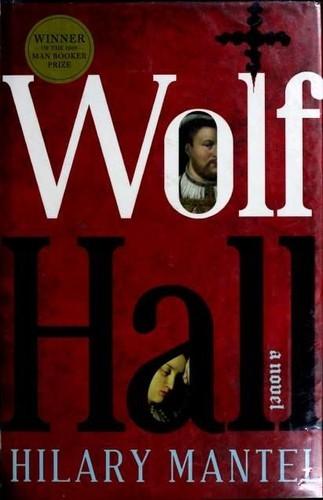
Wolf Hall is a big book, and I approached it the way you approach a big book: on a Sunday evening, slippers on, tea poured, with no expectation of finishing more than a chapter or two. I knew how the Tudor story goes. Everyone does, more or less. I assumed that knowing would make it a slow, stately read for a sensible hour.
I was wrong about the hour, and wrong about stately.
What the book does
The novel opens in 1500, in Putney, with a boy lying on the cobbles after a beating from his father, Walter, a blacksmith and brewer with a vicious temper. The boy is Thomas Cromwell. He gets up, and he leaves. A few pages later it is 1527, and that boy is a lawyer, a fixer and a trusted servant of Cardinal Wolsey, with a house at Austin Friars and a family he loves.
What follows is the long struggle over Henry VIII's wish to set aside Katherine of Aragon and marry Anne Boleyn, seen from the man who ends up making it possible. Wolsey, Thomas More, the Boleyns, the Seymours of Wolf Hall, the ambassadors and the lawyers: everyone moves through Cromwell's attention, and he weighs each of them as they pass.
Why the lamp stayed on
The first reason is the voice. Hilary Mantel writes in the present tense, close behind Cromwell's eyes, and she refers to him almost always as he. At first this is disorienting; there are moments when several men are in a room and you have to work out which he is meant. Then, somewhere in the first hundred pages, it clicks, and you realize you are inside the most watchful mind at court. Everything is weighed, filed and remembered. I started reading the way he listens.
The second reason is that Mantel takes history I thought I knew and makes it uncertain again. Because Cromwell doesn't know what comes next, the book doesn't either. Every meeting with the king is a risk. Every turn of fortune could go the other way. I knew the dates, and still I sat up in bed during a quiet conversation in a gallery, because it felt like a life was being decided in it.
I knew how it ended and I still read it like I didn't, and that is the whole spell.
The third reason is how tender Cromwell is at home. Mantel gives him grief, small jokes, a kitchen, children, wards and household members he gathers around him. The domestic scenes at Austin Friars are some of the most moving in the book, and they make his public cunning more frightening, because you see what he stands to lose. Mantel's Thomas More, by contrast, is a cold and severe figure, which unsettled what I had always assumed about him. That reversal alone kept me turning pages.
I won't run through where the book stops. It covers a stretch of years and ends at a point in the history most readers can guess, but the way it gets there is the pleasure.
A little friction
This is a dense novel. The cast is enormous, many of them share the name Thomas, and Mantel gives you very little help in keeping them sorted. I kept the cast list at the front open with a finger more than once. Some long middle sections, heavy with diplomacy and legal maneuvering, asked for more patience than I had at one in the morning. It is a book that wants a rested reader, and I was not always that.
Who should read it, and when
Read it on long winter evenings, a few chapters at a time, and give it the first hundred pages before you decide. Read it if you like characters who are clever in ways that frighten you a little. Read it if you think you already know the Tudors, because Mantel will make you feel you don't.
Last thought before lights-out
At 1:26 I put it on the nightstand and turned off the lamp. The room was still. I lay there for a while thinking about a man who watched everyone so closely, and how strange it was to have spent the evening looking out through his eyes at a court that could turn on him at any time.