NARRATIVE NONFICTION / Truman Capote
I knew the ending and still couldn't stop.
The 1959 murder of a farming family in Holcomb, Kansas, and the two men who did it. Capote reconstructs the crime, the manhunt and the long aftermath with a novelist's patience and a reporter's eye.
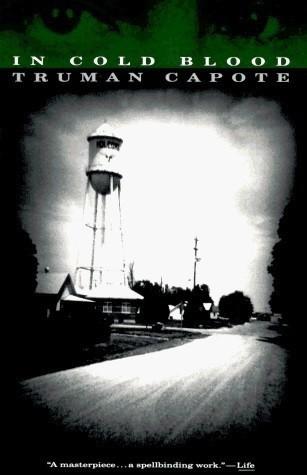
Lights out
The night it started
There is a particular kind of quiet that settles over a house after midnight, when the fridge cycles off and you can hear your own page turns. In Cold Blood is a book about that kind of quiet. I started it in bed with a mug of tea and the vague idea that nonfiction would be easier to put down than a novel. It was not.
What makes that strange is that there is no mystery here, not really. The jacket tells you what happens. The first section tells you, more or less, who will die. Truman Capote's achievement is to make knowing feel worse than not knowing.
The hook
In November 1959, Herbert Clutter, a prosperous and respected wheat farmer, was murdered in his home outside Holcomb, Kansas, along with his wife, Bonnie, and their two youngest children, Nancy and Kenyon. Two ex-convicts, Perry Smith and Dick Hickock, were eventually caught and tried for the killings. Capote went to Kansas, spent years interviewing everyone he could reach, including the two men, and turned it all into a book he insisted was entirely factual but shaped like a novel.
What kept the lamp on
The first section is a masterclass in cross-cutting. Capote moves between the Clutters going about an ordinary Saturday and the two men driving across Kansas toward them. On one side, Nancy helps a younger girl bake a cherry pie, her father goes about the business of the farm, and the town carries on around them. On the other, a car eats up the miles of flat highway, and two men talk about what they are going to do. Each switch shortens the distance. I knew exactly where it was heading, and I kept turning pages faster anyway, as if speed might change something.
That is the dread the meta strip refers to. It is not the dread of the unknown. It is the slow, methodical approach of something you can see coming from miles away across open country, and the people inside the house cannot.
The worst suspense, it turns out, is the kind you already know the answer to.
The second pull is Perry Smith. Capote spends a great deal of the book inside his history: the broken childhood, the injured legs, the dreams of treasure diving, the aspirin and root beer, the hunger to be taken seriously. Dick Hickock is drawn more coldly, a talker and a schemer. The effect of all that attention on Perry is deeply uncomfortable, because it asks you to sit with a person you would rather keep at arm's length. Around one in the morning I put the book down on the duvet for a minute just to stop being in his head.
The third pull is the investigation itself, led by Alvin Dewey of the Kansas Bureau of Investigation, a man who takes the case personally and can't let it go. The town's reaction is drawn with real care, too: the neighbors who start locking doors they never used to lock, the suspicion that settles over people who had known each other for decades.
A little friction
It's impossible to read this book now without knowing that its claim to perfect accuracy has been questioned for decades. Some scenes and conversations have been disputed, and Capote's closeness to his subjects raises questions he never fully answers on the page. I found that I read it partly as reportage and partly as a novel, and I don't think he would mind. But it is worth knowing going in, especially if you come to it expecting a transcript of events.
The final section, about the long legal aftermath, is also slower and more procedural than what comes before, and at that point the lamp had to fight a little harder.
Who should read it, and when
Anyone interested in true crime who wants to see where much of the genre came from. Anyone who likes a novelist's eye on real places. Read it in cold weather, and maybe not alone in a farmhouse.
Last thought before lights-out
I turned the light off at 1:52 and listened to the house for longer than I meant to. Nothing was moving. That is exactly what the Clutters would have heard, too. It took me some time to stop thinking about a lane of elm trees leading up to a farmhouse in Kansas.