PSYCHOLOGICAL FICTION / Gillian Flynn
Two liars, and I believed them both.
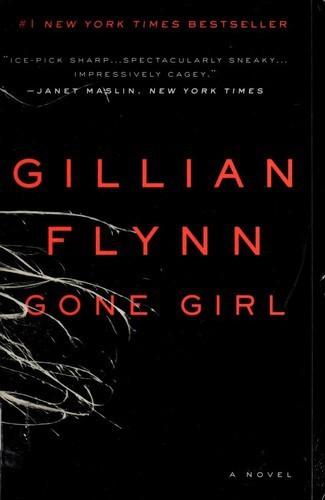
On their fifth wedding anniversary, Amy Dunne disappears and suspicion settles on her husband, Nick. Flynn alternates their voices into a sharp, unnerving portrait of a marriage and the stories we perform.
Lights out
The night it started
I started Gone Girl at eleven with the idea that a thriller would be a palate cleanser, something quick to read for an hour before sleep. I had a mug of chamomile and the good pillow propped behind me. I knew the shape of the story the way everyone does, from the film and from a decade of people saying it, and I assumed knowing the shape would make it easy to stop.
It did not. The tea was cold before Nick Dunne had finished his first morning, and by the time the house had gone completely quiet, the radiator clicking down for the night, I had stopped pretending this was an hour of anything.
What the book does
Gillian Flynn's setup is plain enough to fit on a postcard. Nick and Amy are two magazine writers who lost their jobs in New York and moved back to Nick's hometown of North Carthage, Missouri, on the Mississippi, partly to look after his ailing parents. Nick runs a bar with his twin sister, Margo, whom everyone calls Go. On the morning of their fifth anniversary, Amy is gone, the living room shows signs of a struggle, and the police begin, slowly and politely, to look at the husband.
What makes it strange is the structure. Nick tells the present, day by day after the disappearance. Amy tells the past, through diary entries that begin when they first meet at a party in Brooklyn and move forward through the marriage. So you are reading a man in the middle of a crisis and a woman remembering how they got there, and the two accounts keep brushing against each other without ever quite agreeing.
Why the lamp stayed on
It was Nick's voice that hooked me first. He tells us early on that he is a liar, more or less, and then he goes on narrating as if that settles it. He smiles at the press conference when he shouldn't. He notices things about the police that a grieving man probably wouldn't. Flynn writes him as funny and self-pitying and quick, and at 1 AM I found myself liking him in a way I didn't entirely trust.
Then Amy's chapters arrive, warm and bright and full of the early romance, and I liked her too. That is the trick of the first half. You get two people, each persuasive, each leaving gaps, and you start doing the work the detectives are doing. Who is shading the truth here? What did that sentence just skip over? I read with my thumb holding the next chapter like I could check ahead without technically cheating.
I kept switching sides every chapter, and both sides kept letting me.
There is also the anniversary treasure hunt. Amy has a tradition of leaving Nick a trail of clues every year, and this year's clues are still there to be found after she has disappeared. Each one is a small riddle about their marriage, and Nick has to solve them while the whole town watches. It is a clever device, a way of making the past physically present in rooms and objects, and it gave the middle of the night a steady rhythm: one more clue, one more chapter.
I won't say anything about where the book turns, or how. People who know it know. People who don't deserve to arrive at that part in bed, late, without being warned.
A little friction
Flynn's people are hard company. Almost nobody here is kind for long, and the satire of media frenzy, cable-news hosts and neighborhood vigils can get broad in places. The later stretches lean more on plot machinery than the opening did, and a couple of turns asked me to accept more than I wanted to. But the sentences stay sharp all the way through, and the observations about money, about a recession-hit Midwestern town of empty malls and foreclosed houses, about the roles two people perform for each other, are better than the thriller label suggests.
Who should read it, and when
Read it on a weekend night, because the middle section will take you somewhere past two whether you plan for it or not. If you have seen the film, the book still gives you more, especially the texture of those two voices on the page. If you are reading it with a partner asleep beside you, you may find yourself glancing over at them once or twice. That's normal, I think.
Last thought before lights-out
I closed it at 3:14 and lay there going back over the first chapter, testing every sentence for weight. A marriage is two stories told side by side, and I had just spent four hours believing both of them.